A close look at the stages involved in shaping and assembling a wooden truck, and why proportions, details and a smooth finish make a difference.
Discover the planning, shaping, wheel-making and finishing that turn a simple piece of timber into a wooden toy car. See how traditional craft differs from mass production.
A practical guide to choosing a handcrafted wooden gift by size, materials, finish, age guidance, availability and delivery requirements.
Explore the traditions behind wooden toy-making, the role of the maker's hands and the small decisions that give a handcrafted object its character.
Learn why joints, fit and finishing matter in wooden craftsmanship, and what product details help buyers assess a handmade wooden toy.
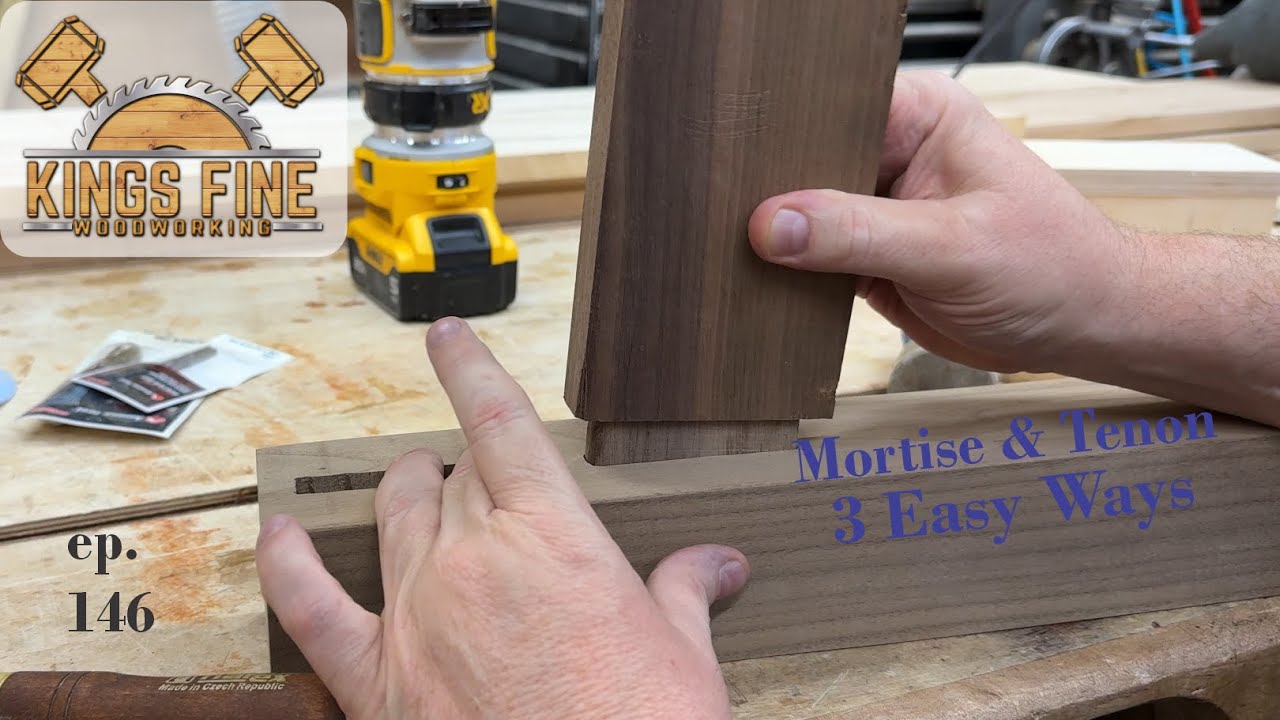
"Hi, my name is James. Today, I'm going to show you three different ways to make a mortise and tenon joint. The key step is to make the mortise first. You start by marking your wood with a marking gauge for clean, precise lines. The first method uses a mortising jig, which combines a drill bit and a square chisel to cut out the mortise quickly. Though the edges might be rough, they’re hidden by the tenon shoulders. For cleaner mortises, you can use a router with a custom jig made from plywood, making light passes for neat cuts. Lastly, using a bearing-guided router bit along a jig gives you perfectly straight mortise walls. Once the mortise is done, you use a sled to cut the tenon quickly and accurately. Remember, the shoulders of the tenon hide any imperfections in the mortise, so precision in fitting is key."
There is nothing quite like the sound of a well-tuned hand plane slicing a long, translucent curl from a piece of linden. This is how I prepare every toy blank — and why I will never use a machine planer for this work.
The finish on a toy is not decoration. It is protection, it is the final expression of the wood's character, and — because these toys go into the hands of small children — it must be completely safe. Here is my finishing process.
The mortise and tenon is the oldest woodworking joint in history. I use it in nearly every toy I make, and I cut every one of them by hand. Here is exactly how it is done.
After the planing, the jointing, the shaping, the finishing — there is a moment when you hold the finished toy up to the light and look at it. This is what that moment feels like, and what I am actually looking for.
I use primarily two woods in my workshop: European beech and linden. They are very different materials and choosing between them is one of the first decisions I make for any new toy. Here is how I think about it.
The dovetail is the most structurally efficient corner joint in woodworking. I use it selectively in toy-making — where the mechanical demands justify the additional time — and I cut every one entirely by hand.
We use cookies to keep you logged in, remember your cart and favourites, and understand how visitors use our site. See our Cookie Policy for details.
Standa Toys offers handcrafted wooden toys made in the Czech Republic, including wooden vehicles and distinctive gifts.
Browse our collection of handcrafted wooden animals, vehicles, building blocks, puzzles, pull toys, figurines, musical toys, and educational toys. Each piece is carved by hand in Bohemia.
We create bespoke wooden toys tailored to your child's age, interests, and environment. Request a custom order .
In a small workshop in the Bohemian countryside, wooden toys come to life using techniques passed down through generations. No plastic. No factories. Just craftsmanship. Learn more about us .
Stories and videos from our workshop. Read the journal .
Enable JavaScript to browse the full collection and shop online.